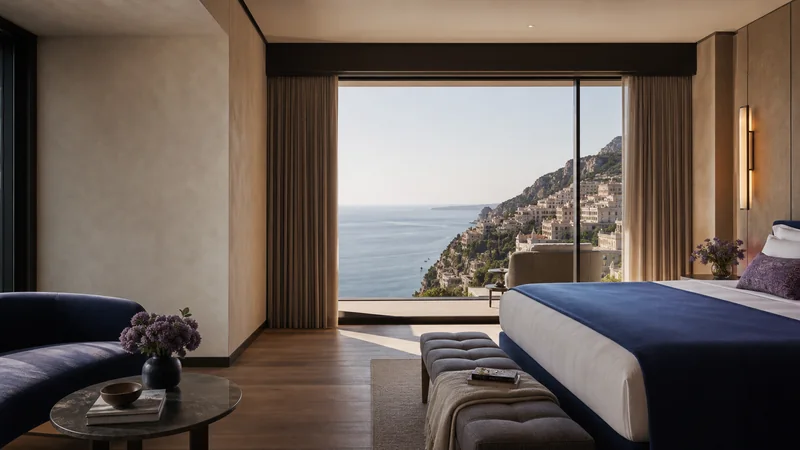
Search intentboutique hotel with sea view
↓Turn search intent into useful arrival pages
Give room, offer, location and experience searches a relevant page instead of sending every guest to the homepage.
Turn hotel character, room detail and direct-booking value into a fast website that helps guests discover, compare and reserve with confidence.

Sea view · breakfast · flexible arrival

A useful reason to book direct, with the conditions stated clearly.

48 hours by the coastLocal guide · 6 min read
Getting here without a carTravel information · updated
Change the journey viewRooms, offers and hotel discovery — designed as distinct decisions.
Strong hotel websites balance emotion with practical decision support. Original property imagery earns attention; structured room, offer and location content turns that attention into informed action.


Use the hotel’s real character, audience and stay experience to shape the visual system and content hierarchy.
Keep room differences, policies, trust evidence and booking actions readable and easy to reach on mobile.
Connect search landing pages, room views, date searches and booking handoffs to a clear review plan.
Independent hotels rebuilding an established website
Boutique properties with a distinctive stay story
Resorts with rooms, experiences and packages
Hotel teams improving mobile and direct-booking journeys
Hotel website design combines property storytelling, search-led information architecture, mobile usability, technical SEO and a clear booking handoff. The website should help guests understand room differences, policies, location and direct value, while the connected booking engine or PMS remains responsible for live rates, inventory and reservation operations.
A strong hotel website connects discoverability, property character, decision clarity and the booking handoff—without pretending to replace live hotel systems.
Search intentboutique hotel with sea view
↓Give room, offer, location and experience searches a relevant page instead of sending every guest to the homepage.
Differences are visible before availability
Present differences, inclusions, policies and direct value before guests leave to compare elsewhere.
Carry the selected room, offer and stay context towards availability with a visible next step.
Each layer has one job: help the right guest find, understand, trust or progress towards a direct stay.
/stay/Rooms & suitesBOOKING INTENT
/offers/Seasonal staysOFFER INTENT
/explore/Local guidesDISCOVERY
One purpose for every indexable URLGive rooms, offers, facilities, location and experience content a distinct page purpose, URL and internal-link role.

✓Room difference
✓Policy clarity
✓Action in reach
Prioritise the room facts, trust signals, policies and booking controls guests need on the device they use to research stays.
Explain what makes each stay relevant, who it suits, what is included and which useful next step follows.
Direct reservation journey ready
Connect website content to the appropriate availability or reservation step without implying unsupported live inventory.
Optimised media94
Static delivery97
Accessible UI92
Illustrative quality checksProtect crawlability, structured data, media performance, accessibility, redirects and canonical signals during the build.
Next reviewImprove room comparisonOwned
Track meaningful events such as room views, date searches and booking handoffs with documented definitions and ownership.
Design, development and migration move together so visual improvement does not break search value, content ownership or hotel operations.
Review search visibility, existing URLs, content, analytics, booking paths and mobile friction before changing the structure.
Assign one primary purpose to every important page and define navigation, internal links and redirect requirements.
Create page systems for rooms, offers, experiences and practical hotel information across desktop and mobile.
Implement verified handoffs to the booking engine, CRM, analytics and other agreed systems.
Test metadata, schema, redirects, canonicals, forms, accessibility, performance and analytics before release.
Use search, engagement and booking-progression signals to prioritise the next content or experience improvement.
Structure the migration around search intent, the mobile guest decision and technical continuity before changing an established hotel website.
Give rooms, offers, location, facilities and experiences distinct page purposes without creating overlapping keyword targets.
Make room differences, policies, trust evidence, availability and booking actions understandable on a small screen.
Plan redirects, canonicals, structured data, image performance and analytics before replacing an established hotel website.
Keep the guest-facing experience clear without confusing content and persuasion with live availability, rates or property operations.
Owns property storytelling, search landing pages, room and offer content, navigation, trust evidence and the route towards booking.
Own live rates, inventory, reservation details and property operations. Connections and handoffs must be verified for the hotel’s actual stack.
Clear scope matters more than broad promises.
A robust project should cover discovery, information architecture, responsive design, room and offer page systems, content requirements, technical SEO, booking-engine handoff, measurement and launch quality checks. The exact scope depends on the property, current website and connected hotel systems.
Rankings cannot be guaranteed, but migration risk can be reduced. Existing indexable URLs, search intent, backlinks, metadata and internal links should be audited before launch, with one-to-one redirects, canonicals, sitemaps and post-launch monitoring prepared in advance.
Yes. The service can combine hotel website design and development, including responsive page implementation, content structures, technical SEO foundations and agreed integrations. Scope is confirmed after reviewing the current site and hotel technology stack.
Often, but the method depends on the booking-engine provider. Hotel Tech AI reviews supported links, widgets, APIs, tracking behaviour and mobile handoff before agreeing the integration so the website does not make unsupported availability claims.
A hotel website must support high-consideration stay decisions. Guests need to compare room types, dates, inclusions, policies, location and experiences before moving into live availability. The content model, imagery and booking handoff should be designed around those decisions.
Yes. Mobile design is treated as a primary guest journey rather than a reduced desktop layout. Room details, images, policies, navigation and booking actions are prioritised for readable, reachable use on smaller screens.
Not every project needs a complete replacement, but the audit identifies missing or weak property imagery, room detail, offer information and destination content. Existing assets can be retained where they accurately support the guest decision and brand.
Timing depends on page count, content readiness, photography, approval speed, migration complexity and booking-engine requirements. A scoped plan should define stages, dependencies and launch checks before development begins rather than promise one fixed timeline for every hotel.

Map the guest decision, current systems, team owner and smallest useful next step.